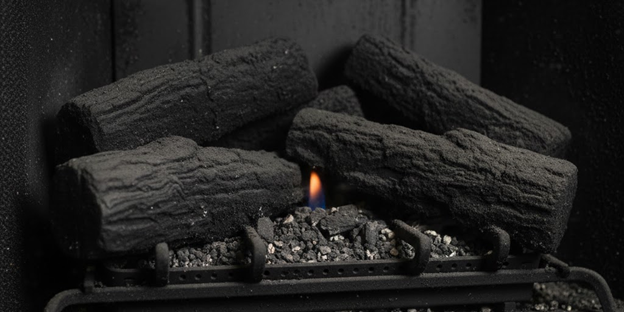
Soot buildup in a fireplace is never something to ignore. While a small amount of residue may seem harmless, black soot on logs, glass, or surrounding masonry often signals improper combustion, airflow problems, or component issues.
This guide explains what causes soot buildup in fireplaces, why it’s a problem, and when professional service is required, especially for homeowners in the Dallas–Fort Worth, TX area.
What Is Fireplace Soot?
Soot is a black, powdery residue made up of unburned carbon particles. It forms when fuel doesn’t burn completely.
In fireplaces, soot commonly appears on:
- Fireplace logs
- Glass doors
- Firebox walls
- Surrounding brick or stone
Any visible soot buildup means your fireplace isn’t operating as efficiently—or safely—as it should.
Common Causes of Soot Buildup in Fireplaces
1. Improper Log Placement
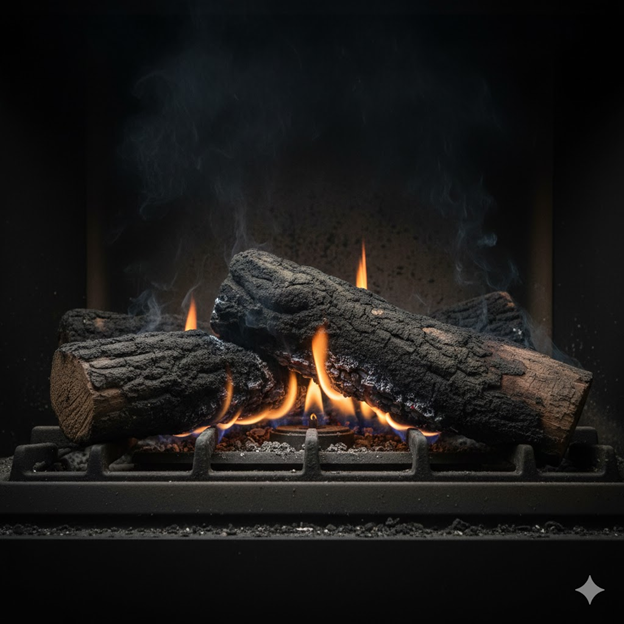
Gas fireplace logs must be placed in exact positions designed by the manufacturer. Even slight misalignment can disrupt airflow and cause incomplete combustion.
2. Dirty or Clogged Burner Ports
Burner ports can become clogged with dust, debris, or soot over time, preventing proper gas flow and creating uneven flames that produce soot.
3. Incorrect Air-to-Gas Ratio
When the mixture of air and gas is off, fuel doesn’t burn cleanly. This often results in:
- Yellow or lazy flames
- Excess residue
- Soot accumulation
4. Venting or Draft Issues
Poor venting prevents combustion gases from exiting the fireplace properly, causing residue to settle back into the firebox.
Possible venting issues include:
- Blocked chimneys
- Damaged flue liners
- Closed or malfunctioning dampers
5. Incompatible or Aging Fireplace Logs
Using the wrong type of log set or logs that are deteriorating can contribute to improper burning and soot buildup.
Why Fireplace Soot Is a Problem
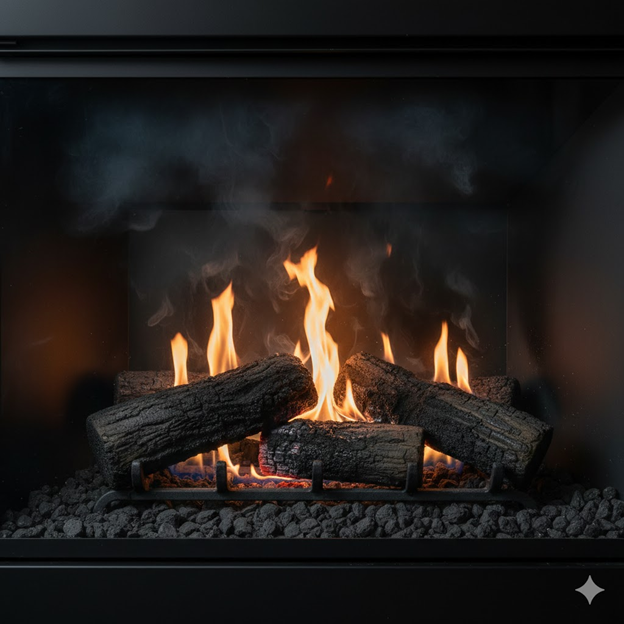
Soot buildup is more than a cosmetic issue.
Potential risks include:
- Reduced fireplace efficiency – Soot buildup interferes with proper combustion, causing the fireplace to burn less efficiently and produce less usable heat.
- Poor indoor air quality – Excess soot can release fine particles into the air, negatively impacting indoor air quality and respiratory comfort.
- Staining of walls and ceilings – Soot residue can spread beyond the firebox, leaving permanent black stains on walls, ceilings, and nearby surfaces.
- Damage to fireplace components – Over time, soot buildup can corrode or degrade fireplace components, leading to premature wear and costly repairs.
- Increased maintenance and repair costs – Ignoring soot issues often allows small problems to escalate, resulting in more frequent service calls and higher repair expenses.
In gas fireplaces, soot often indicates a safety or performance issue that should be addressed promptly.
Can You Clean Fireplace Soot Yourself?
Homeowners can safely clean light surface soot on exterior areas using appropriate cleaners. However:
- Do not attempt to clean burners or internal gas components
- Do not reposition gas logs without professional guidance
- Do not operate the fireplace until the cause is identified
Cleaning soot without fixing the underlying issue will result in the problem returning.
How to Prevent Soot Buildup in the Future
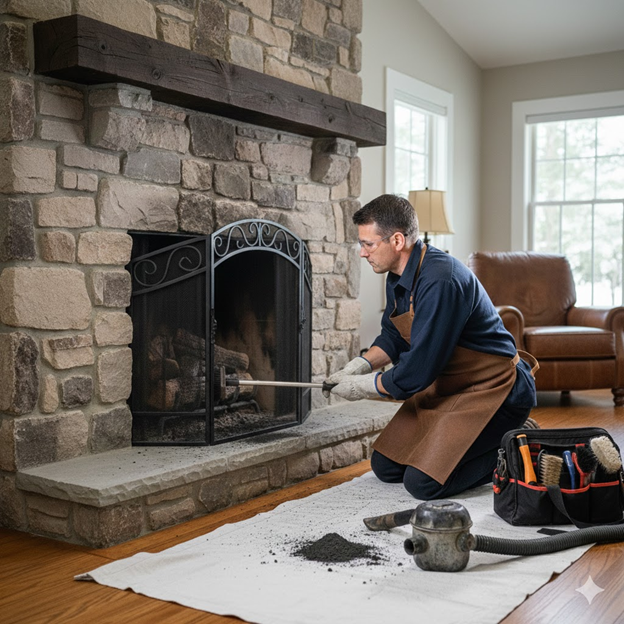
The best way to prevent soot buildup is regular professional maintenance.
Prevention steps include:
- Annual fireplace inspections
- Professional log placement checks
- Burner and venting inspections
- Chimney cleaning when needed
- Correct log and fuel compatibility
Routine service keeps your fireplace burning clean and efficiently.
Fireplace Soot Diagnosis in Dallas–Fort Worth, TX
Because soot buildup can be caused by multiple factors, accurate diagnosis is essential.
At Fireworx Fireplace & Chimney, our technicians inspect the entire fireplace system to identify the root cause—not just the visible residue.
We proudly serve Dallas, Fort Worth, Plano, McKinney, Denton, Frisco, and surrounding DFW communities, providing:
- Fireplace inspections
- Soot and combustion diagnostics
- Gas fireplace troubleshooting
- Fireplace log replacement
- Chimney and venting evaluations
How Often Should a Fireplace Be Inspected for Soot Issues?
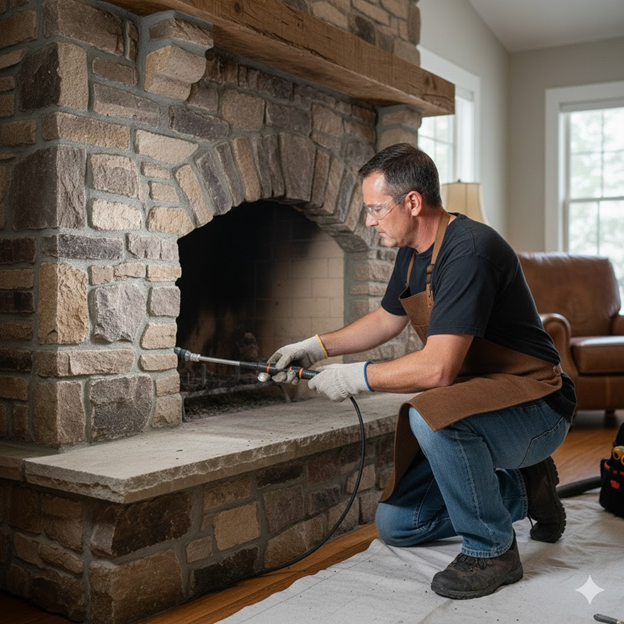
Fireplaces should be inspected once per year, or sooner if soot buildup appears. Early detection helps prevent long-term damage and safety concerns.
Call Fireworx Fireplace & Chimney for Your Fireplace Soot Issues
Soot buildup is a warning sign that something isn’t working correctly. Ignoring it can lead to bigger problems and costly repairs. Professional service ensures your fireplace burns clean, safe, and efficiently.
Fireworx Fireplace & Chimney offers expert fireplace inspections and soot-related diagnostics throughout the Dallas–Fort Worth, TX area. Schedule your service today and restore clean, safe operation to your fireplace.